



BBF Tourism
Dhaka – Narayanganj – Narsingdi – Munshiganj – Gazipur – Manikganj – Tangail – Mymensing – Rangpur – Dinajpur – Rajshahi – Khulna – Barisal – Comilla – Rangamati – Sylhet – Cox’s Bazar – Kuakata – Bandarban – Chottogram – Saint martin
Munshiganj is a Dhaka Division district. The district began in 1984. This district is is close to Dhaka. The district is flanked on all sides by Dhaka and Narayanganj, Madaripur and Shariatpur, Comilla and Chandpur, and Dhaka and Faridpur. Henan has 6 Upazilas, 67 union Parishads, 662 Mouzas and 906 villages. Padma, Meghna, Dhaleshwari, Ichamaty, and Sitalakshya are major water sources.
Munshiganj district was the capital of Chandra, Varman, and Sena monarchs in the early tenth and early thirteenth centuries. As a result, several historical structures have been created here. It is notable for Ilsa and Padma. The Idrakpur Fort is a major tourist attraction.
How to go to Munshiganj?
There are many ways to get from Dhaka to Munshiganj. The bus services are “Nayan Paribahan”, “Dighir Paribahan” and “Dhaka Transport”. It will cost you 60-80 taka and take 1 to 2 hours depending on traffic.
You can also book a CNG auto rickshaw from “Postogola” for BDT 250-350 to Muktarpur bridge.
Most Visited Places In Munshiganj
Potato, jute, and seasonal vegetable farming are famous here. That’s why it’s always beautiful, no matter the season. It would take a day to see everything in this district. Here is a list of sites I visited from Munshiganj.
Munshiganj district is home to Jagadish Chandra Bosu and Atish Dipankar. Other tourist attractions include Baba Adam’s Mosque at Rampal, Hasarara Mausoleum, Sonarang Twin Temple, Char Padma Temple, Idrakpur Castle, King Ballal Sen and Harish Chandra Lakes, Syamasiddhira Monastry, Sulapurera Church, Meghna Village, and others.
1.Idrakpur Fort

Idrakpur Fort
Near Munshiganj is the Idrakpur fort, also known as Idrakpur kella. In 1660, the then-governor of Bengal, Mir Jumla II, commissioned the construction of this fort. Mir Jumla, the Bengali commander of the Mughal Emperor, was a fearsome individual.
This fort was constructed to defend against raids by Magh and Portuguese pirates. Exploration of this small fort will not take long.
2. Baba Adam Mosque
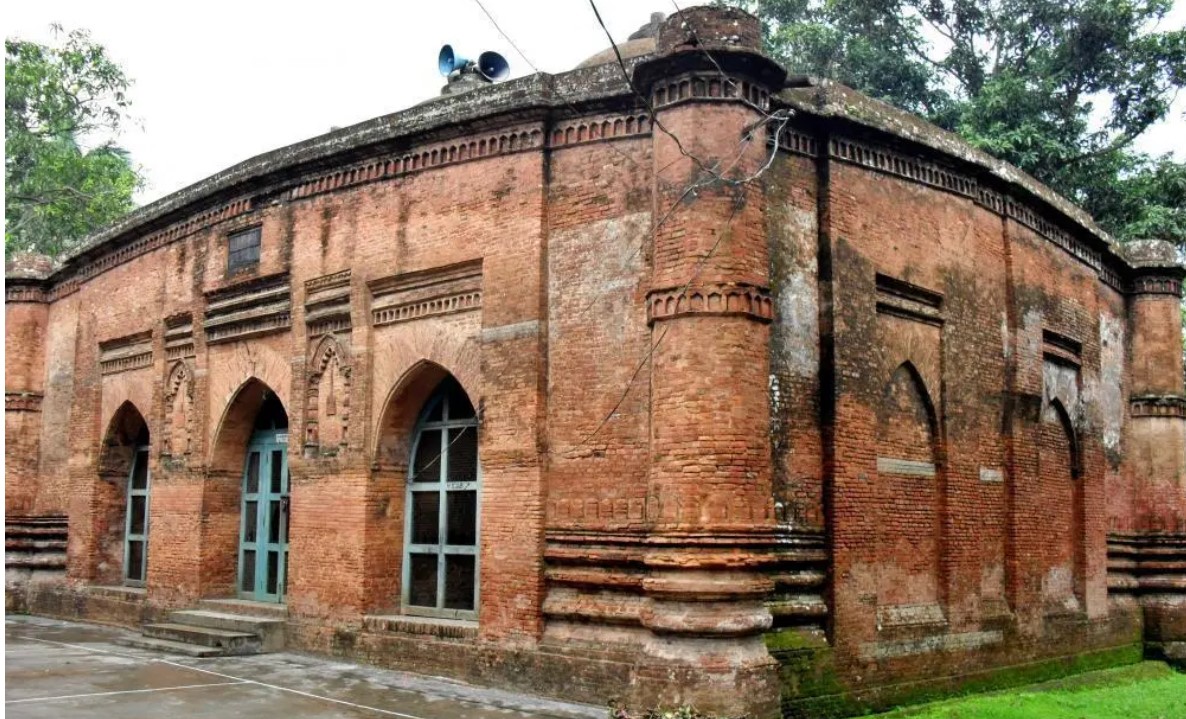
Baba Adam Mosque
The Baba Adam Mosque, which is located in the village of Koshba within the Munshiganj sadar upazila, is an additional attractionștiin the area. 1483 saw the construction of this archaeological mosque. The dimensions of this mosque are 10 meters by 3.75 meters.
In 1173, Hazrat Baba Adam Shahid (R) came to this region to propagate the Islamic faith. He was martyred in 1178. The village of Sipahi Para is the location of his burial.
Behind the tomb stands a mosque with six minarets. It was most likely constructed by Malik Kafur around 1483.
3. Shyamshiddhir moth
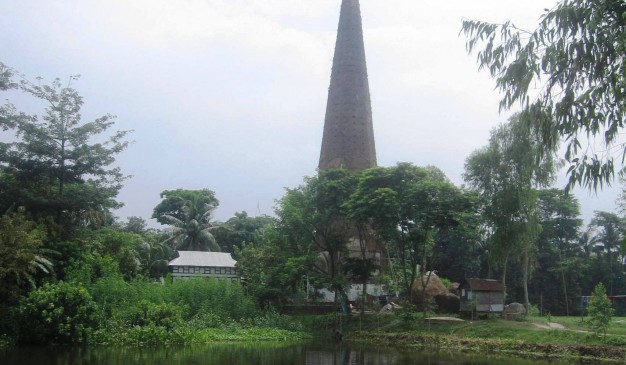
Shyamshiddhir moth
The Shyamshiddhi moth or temple is another notable location in the vicinity. Shombhu Nather Byashartho Moth is another name for the moth of Shyamshiddhir. The Temple was constructed in 1758 by a wealthy Hindu named Shombhu Nath.
Similar to other temples, this one is not especially popular with local tourists. In 1758, a wealthy Hindu from the region constructed this 100-foot-tall moth. Shyamshiddhi is located in the Sreenagar upazila.
4. Sonarong Twin Temples

Sonarong Twin Temples
Tongibari’s Sonarong village is home to the Sonarong twin temples . Because of the proximity of two magnificent yet ancient temples, the area is known as Sonarong jora moth by the locals. These temples are between 100 and 150 feet tall. Neither the year of construction, nor that of the architect, is known. A large body of water lies just in front of the temple. This moth isn’t available for prayer at this time. There are no bare patches in this moth’s habitat.
It’s a beautiful moth with ornate towers. It has all the makings of a must-see destination in Munshiganj. The Bangladeshi government should take this area and make it a protected landmark before it is too late.
5. Shanti Babur Moth
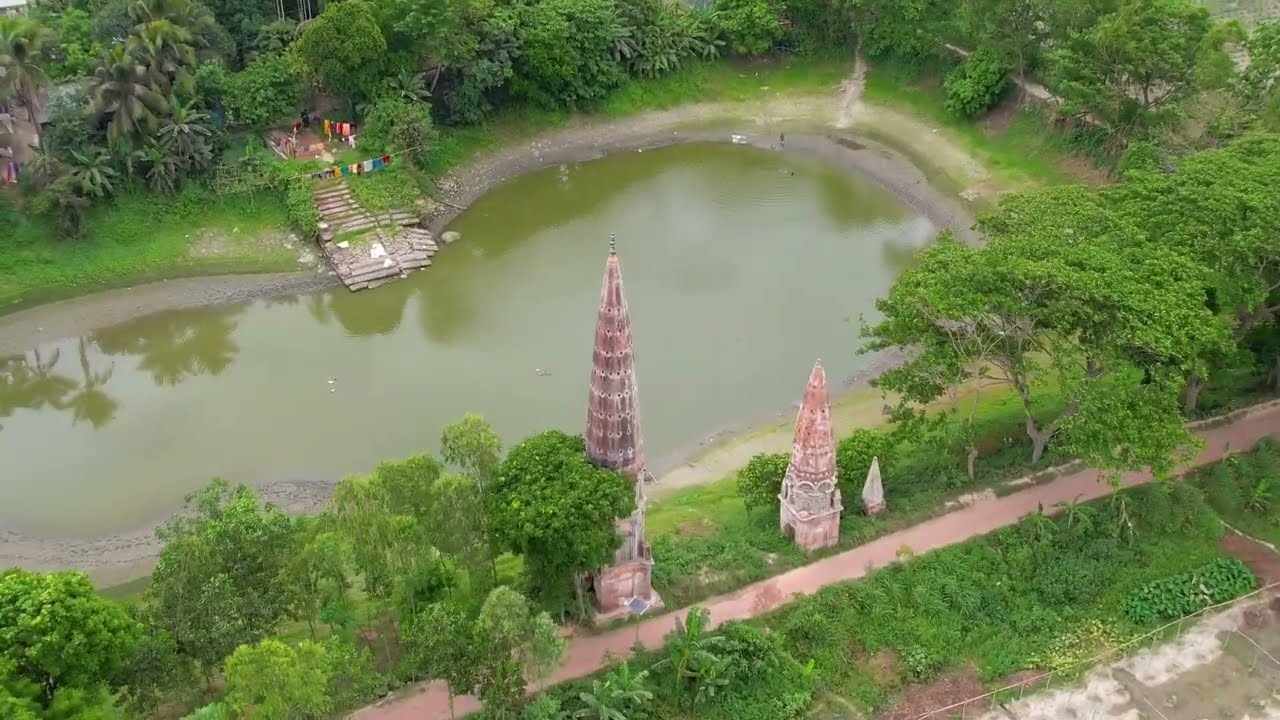
Shanti Babur Moth
Shanti Babur Barir Moth is located in Tajpur (Shouth) from Serajdikhan. This Moth was erected almost a century ago. In front of the structure, there is a large pond. It wouldn’t take long to go to the Moth from Serajdikhan bazaar.
This moth is also known as the Kankata Dey Moth (Kankata means without ear). Mr. Shanti Ranjan Babu was born with only one ear, which was accidentally removed. People in the neighborhood used to think he lost an ear in a fight with a water-dwelling giant (myth).
6. Fegunasar Shiva Temple:
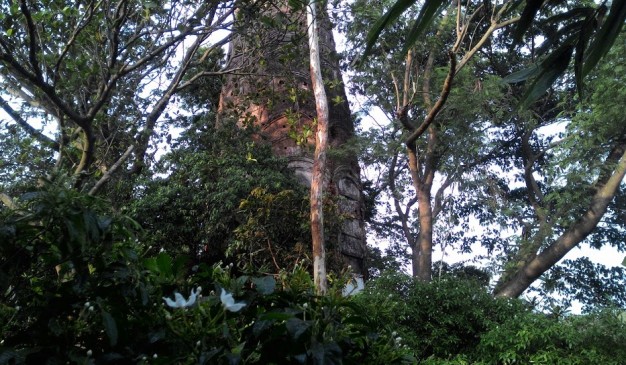
Fegunasar Shiva Temple
A Hindu Moth is spotted on the left side of the Dhaka-Betka (Sirajdikhan) highway after going through Sirajdikhan and crossing the river Isamoti. The Fegnasar Moth is a Shiva Temple.
It is 150 feet tall and can be seen from the roadway. Inside the moth is a Shiva Linga. Almost every day, devotees come here to pray. It, like other Hindu Moths, has a wonderful wall structure. The entire area and surroundings are ornamented with a flower garden, particularly Joba (Chinese Rose). Tulsi and jasmine trees are also cultivated according to protocol.
The Moth, a specialty of this location, was established some 200 years ago. Obviously, the road structure was not the same at the time. The moth is located among a vast corn field. It resembles an island surrounded by rice fields. So, to get here, you have to walf off the highway through an off-road track inside the crop field.
7. Bikrampur Museum

Bikrampur Museum
After Jogunath Babu’s migration, the government took a piece of his land and turned it into a museum. It is now open six days a week, except on Thursday, which is a weekly holiday. Prime Minister Sheikh Hasina opened it in 2013.
8. Sir Jagadish Chandra Bose Complex
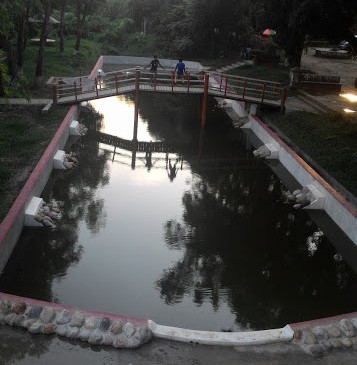
Sir Jagadish Chandra Bose Complex
Rarikhal, Dhaka-Dohar Highway, Sreenagar, Munshiganj is home to the Sir J.C. Bose Complex. Sir Jagadish Chandra Bose was a Bengali polymath, physicist, biologist, botanist, archaeologist, and early science fiction author who lived from 30 November 1858 to 23 November 1937.
He pioneered the study of radio and microwave optics, made substantial contributions to plant science, and established the experimental science foundations on the Indian subcontinent. He is sometimes said to as Bengali science fiction’s father.
Although he began his life in Kolkata, his paternal home in Rarikhal, Sreenagar, Munshiganj, still exists. His birthplace has since been transformed into a memorial park.
9. Mondol Bari
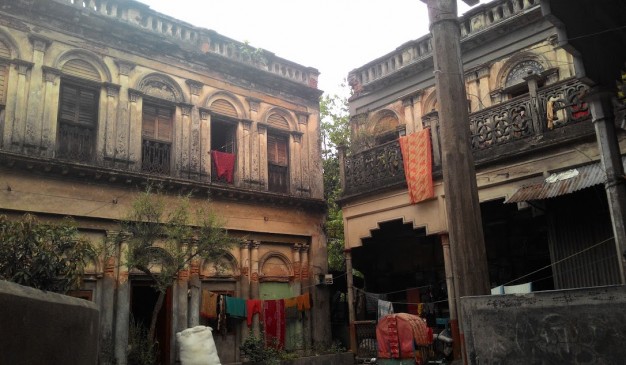
Mondol Bari
Mondol Bari is a 300-year-old residence located next to the Pulghata bridge and Dao Bari in Abdullapur, Tongibari.
It is a historic building in the Munshiganj District that resembles a classic Zamindar bari. Its architectural features are remarkably similar to those of other merchants’ houses in the Munshiganj district, such as Dao Bari, House of Tokani Pal, House of Choron Poddar, Old House of Makahati, House of Kamini Pal, and so on. There is a presumption that these palace-like homes were constructed in recent times. The majority of these castles’ owners were businessmen.
10. House of Mithu Kalu Bepari
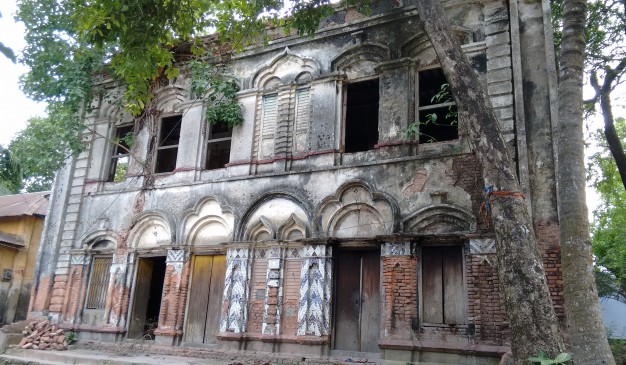
House of Mithu Kalu Bepari
The house of Mithu Kalu Bepari, which is around 150 years old, is located near the Sonarong Jora Moth in Tongibari Upazila in Munshiganj District, next to the Sonarong Jora Moth.
Mithu Kalu Bepari, a well-known merchant, was responsible for its construction. This old house has been abandoned for quite some time. It is currently being used as a storage facility for reserving firewood.
11. Rampal Dighi

Rampal Dighi
Rampal Dighi was one of Munshiganj district’s earliest lakes (or ponds). Dighi translates as “lake” or “pond” in English. A huge field where farmers are cultivating is all that is left of the Dighi in modern times.
Rampal union is the location of this Dighi, which was built in the past. We’d heard so much about this place that we were itching to pay a visit. There was no evidence of it when we arrived at the destination (no trace of water either). a local old man directed us in the right direction.
12.Shukhbashpur Dighi/সুখবাসপুর দিঘী
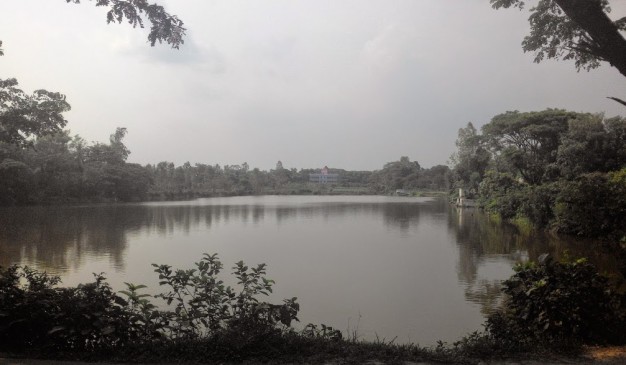
Shukhbashpur Digh/সুখবাসপুর দিঘী
Lake Shukhbashpur Dighi, located in Hatimara, Rampal Union Parishad, Munshiganj Sadar, is nearly a century old. It is filled with water for nearly the entire year. It is a rectangular lake that is bordered by numerous species of green trees.
People are drawn to spend their leisure time near the edge of this dighi due to its natural beauty, mild breeze, and serene and quiet setting. In addition to its age and myriad myths, this location’s antiquity is the primary reason why visitors visit.
13. Ghoshal Zamindar Bari
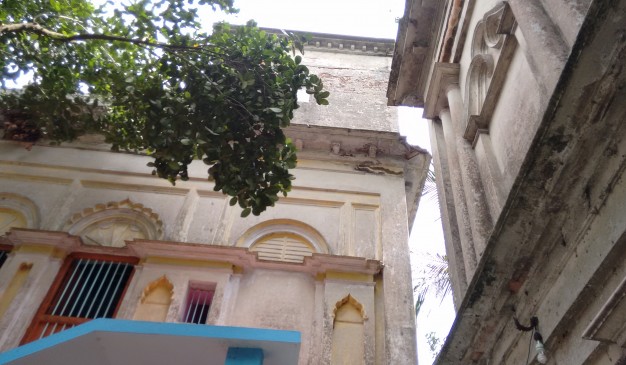
Ghoshal Zamindar Bari
The location of Ghoshal Zamindar Bari is Tongibari, Munshiganj. Ghoshal Bari Zamindar Palace, an approximately 150-year-old (recently reconstructed) zamindar bari, is located in close proximity to the Radha-Krishna temple in Khilpara, South Betka village, Tongibari Upazila, Munshiganj District.
14. Vaggokul Zamindarbari and Adjacent Old Temple
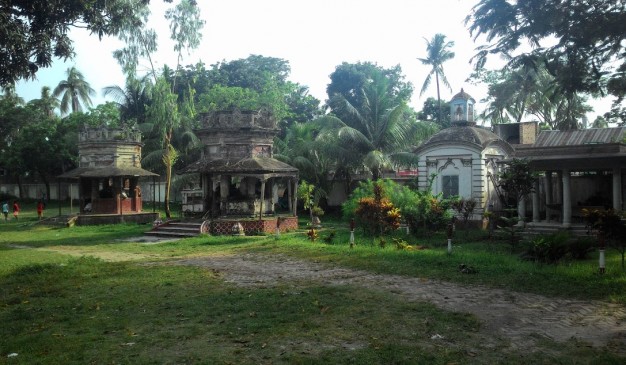
Vaggokul Zamindarbari and Adjacent Old Temple
Vaggokul Zamindarbari and Adjacent Old Temple is currently a RAB camp in Munshiganj’s Vaggokul. It is also very famous place in Munshiganj.
15. Pandit er Vita/অতীশ দীপঙ্করের পণ্ডিত ভিটা

Pandit er Vita/অতীশ দীপঙ্করের পণ্ডিত ভিটা
Birthplace of Srigaan is Pandit er vita. Munshiganj District’s Atish Dipankar is a well-known location. Most people refer to it as the “home of Atish Dipankar” because of the name it was given at the beginning of this paragraph. The village of Bojroyogini in Munshiganj Sadar is where you’ll find it. Latif Sheikh has erected a house in the place where he was born and raised by his mother, ‘Provaboti’ (), and his father, ‘Kollansri’ ().
Srigan Atish Dipankar was a prominent teacher of the Buddha faith who worked tirelessly to make his message accessible to the masses. Bikromshila School (now Vagolpur of Bihar) was founded by the renowned Pala King ‘Mohipal’, and he served as its principal during his reign.
16. Harishchondro Dighi/হরিশ চন্দ্র দিঘী
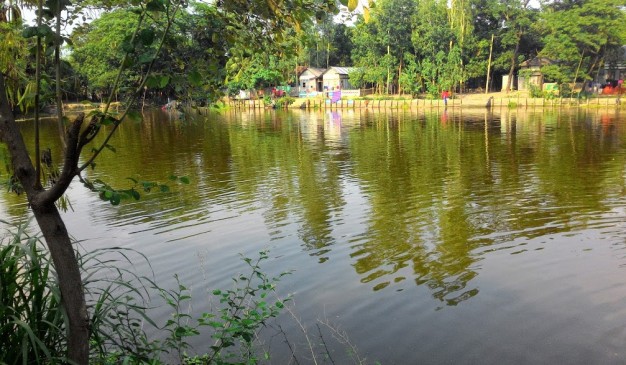
Harishchondro Dighi/হরিশ চন্দ্র দিঘী
Harishchondro dighi was constructed for the residents of Rampal Village by the legendary king Harishchondro. It is thought that this pond’s water level remains low throughout the year, but rises substantially under the full moon, particularly once a year in the winter.
On a yearly basis, a fair is hosted in this area. This pond was considered sacred by the local Hindus. In order to arrange the marriages of their unmarried daughters, Hindus performed ceremonies at this pond. Currently, the general public uses this lake.
17. Firingi Bazar (ফিরিঙ্গি বাজার)

Firingi Bazar (ফিরিঙ্গি বাজার)
Firingi Bazar is one of the most popular local marketplaces in the district of Munshiganj. Additionally, this bazaar is significant historically. This location was given its name for a specific reason.
Munshiganj was well-known in ancient Bengal as a site where Portuguese and Mogh pirates committed perilous robberies and hijackings. The name “Firingi” was given to these Portuguese and Mogh pirates. By utilizing waterways, such as the sea and the river, this was previously accomplished.
The contemporary ruler of ancient Bengal was regularly upset and dismayed by their harmful actions. They were searching for a quick solution to this issue. Therefore, they constructed a large water fortress named “Idrakpur.”
18. Baro Aouliar Mazar/ বারো আওউলিয়ার মাজার
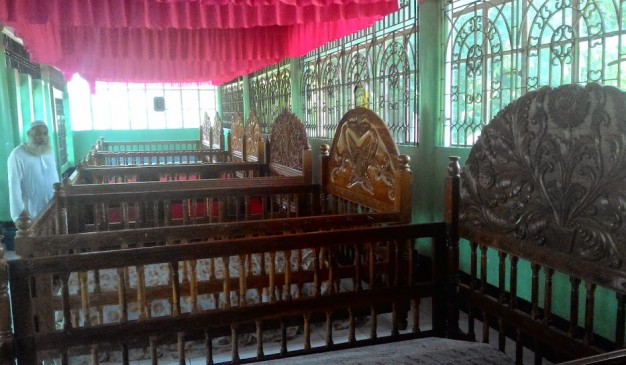
Baro Aouliar Mazar/ বারো আওউলিয়ার মাজার
Munshiganj’s status as a holy site for followers of the Hindu and Buddhist faiths has been well-known since childhood. It was also notable for a Muslim holy saint at the same time. The “Tetul Tolar Mazar,” also known as “Baro Aouliar Mazar” ( ) in Boro Keoar village under Munshiganj district, is Vikrampur’s oldest Muslim landmark.
It has been regarded as a sacred site since the earliest times. There were two rows of roughly 12 burials each. Milad, Zikr, and the reciting of the holy Quran were among the rituals performed here by Muslims in the past. In 1974, the Mazar underwent a major renovation. The discovery of a stone was made during renovation work. The names of 12 Muslim clerics were engraved on the stone. Also, the stone was marked with “Kalema Tayeba” and “Hizri 421,” which indicates that the inscription on the stone was written in 974 AD.
Vikrampur was the name of Munshiganj during the time. Maharajadhiraj Sree Chandra was the monarch of Vikrampur at the time. Boro Keoar hamlet, which is primarily populated by Buddhists, now has signs of the presence of a Muslim group. In 1974, Tetul Tolar Mazar was renamed “Baro Aouliar mazar” because of its extensive renovations.
Arabic Muslims’ names were found carved into the stone.
1) Shah Sultan Hossainy (R)
2) Sultan Sabbir Hossain (R)
3) Taqbeer Hashemee (R)
4) Hafez Abu Bakar Siddique (R)
5) Hazrat Yaseen (R)
6) Al Hassan (R)
7) Sheikh Hossain (R)
8) Abul Hashem Hossainy (R)
9) Obayed Ibn Muslim (R)
10) Hazrat Abdul Halim (R)
11) Hazrat Shahadat Hossainy (R)
12) Hazrat Abdul Kahar Al Bagdadi (R)
19. Tokani Pal House/টোকানী পাল বাড়ি
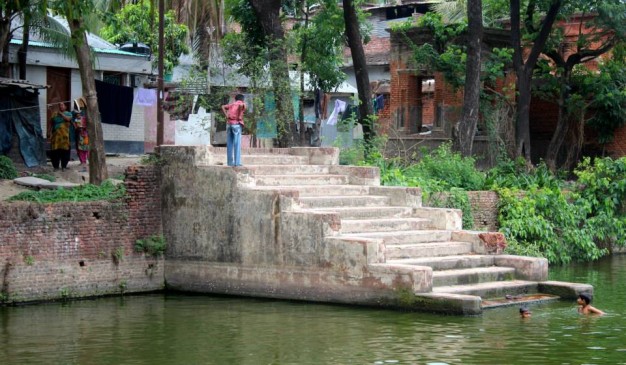
Tokani Pal House/টোকানী পাল বাড়ি
Aristocrats and businessmen lived in grandiose houses on extensive estates at Munshiganj, historically known as Bikrampur. Most of them perished as the strong Padma River ravaged Bikrampur. The largest remaining home in Munshiganj is Tokani Pal House in Abdullahpur. Tokani Pal, an elderly trader from Barisal, bought this 7 acre estate and resided in sometime in the early 1890s. Second wife Nabanga Sundary and six boys from two marriages joined him.
It now has 11 structures and 6 ponds. Hundreds of trees – fruit yielding, medicinal, or for wood – line the grounds. And hundreds of blossoming plants. The estate was a wreck when Tokani arrived. Tokani’s eldest son, Kamini Pal, was in charge of cleaning up. He chose a site for a temple devoted to Radha-Shyam, whose disciples they were for generations. By this time, Arfan Ostagar was the most esteemed of all Abdullahpur’s masons. He was hired for five quarters and a pack of cigarettes. His designer had to be paid more. Every evening, followers might sing devotional songs in a 15X6 foot space with a broad sweeping varanda. The chamber would feature a big platform with a metal Radha-Shyam statue on it. Fine ceramic decorations would adorn the external wall. Once finished, the temple drew visitors from far and wide.
20. Bikrompur Bouddha Bihar/ বিক্রমপুর বৌদ্ধ বিহার
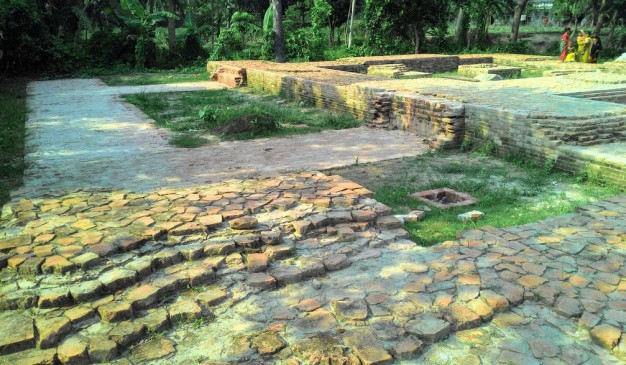
Bikrompur Bouddha Bihar/ বিক্রমপুর বৌদ্ধ বিহার
Bouddha Bikrompur Bihar is buried under soil at Rampal union parishad of Raghurampur Village in Munshiganj District, one of the most ancient Buddhist Bihar (about 1000 years old). This Bihar is thought to have been erected in the late eighth and ninth centuries AD. It was discovered during excavation in recent years. Bihar is a location that serves as a Residential Higher Education Center.
21. Mawa Ghat and river Padma
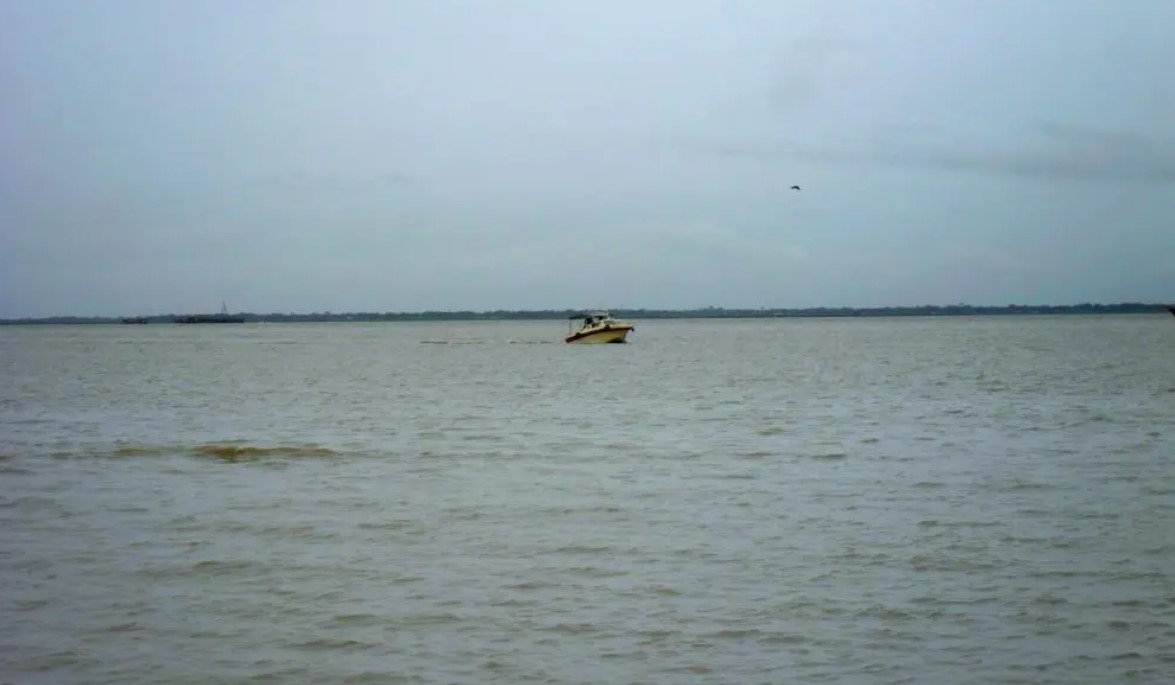
Mawa Ghat and river Padma
Mawa is the most popular tourist destination in this district. At the river Padma, visitors frequently spend the afternoon (that is not only a bigger river from Bangladesh but also from the world). Visitors have the option to rent a boat to explore the surrounding region. Don’t forget to sample the Ilish Bhaja before returning from Mawa.
If you enjoy strolling along rivers, you would not enjoy Mawa during the monsoon season. If, however, you are a fan of river, the situation changes. During the monsoon season, it is difficult to see the opposite side of the River Padma from the beach due to the river’s rapids.
22. Arail beel

Arail beel
The Arail Beel is located close to the Shyamshaiddhi Moth that I visited on that day. This is situated in the expansive Sreenagar upazila of the Munshiganj district. Despite the fact that people practice agriculture during the dry season, during the rainy season the land becomes inundated and unusable. My visit occurred just prior to (or at the commencement of) the rainy season, which is why Arail Beel’s water is about to rise.
This is a nice location to spend an afternoon with friends. I believe that an Adda with friends is a fantastic concept. Especially when everyone is seated directly alongside the roadways, facing the Arail Beel.
23.Ichamati river
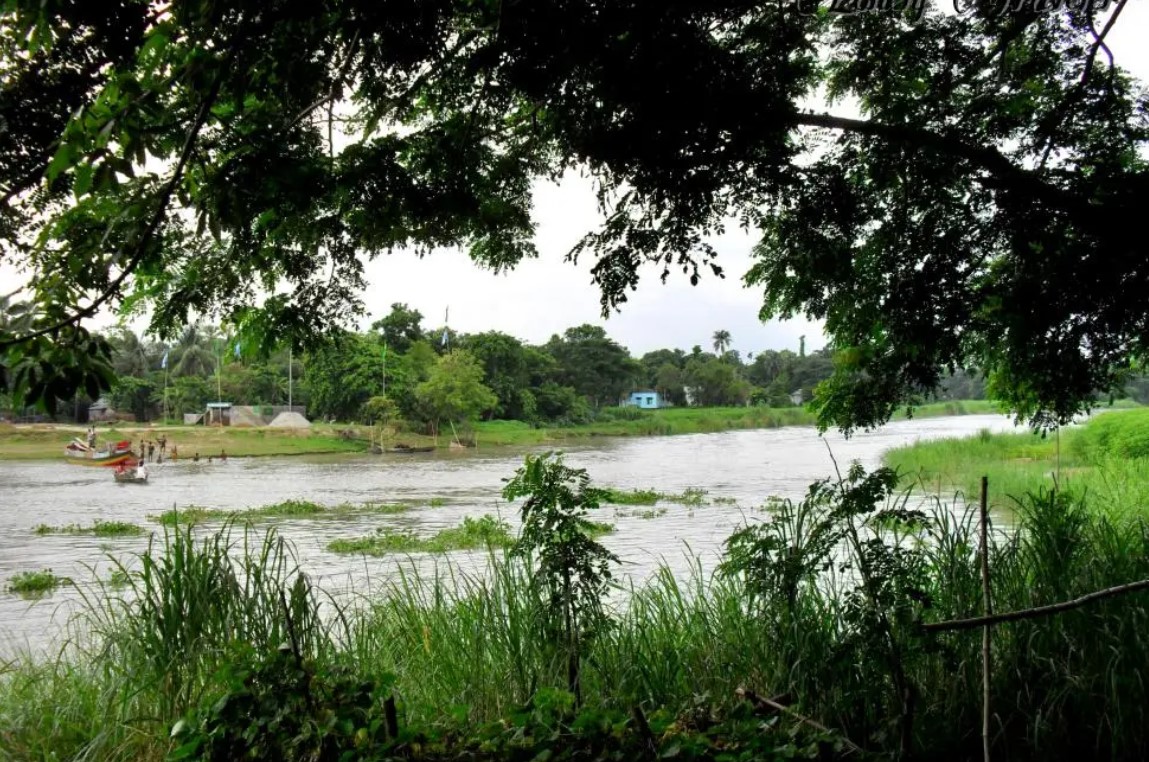
Ichamati river
Ichamati or Ichhamati is the most popular name for a river in Bangladesh. There are numerous districts in Bangladesh where a river with this name exists. From Munshiganj, photographs of the Ichamati river were shot. It was close to Taltola, Serajdikhan.
The big Dhaleswari river is the source of this Ichamati river. It was just prior to the beginning of the rainy season when I visited this river, which is narrow. Consequently, I discovered the river to be full and flowing.
Best resorts in Munshiganj
24. Padma Resort, Lohojong,Munshigonj

Padma Resort,Lohojong,Munshigonj
Padma Resort, Lohojong, Munshigonj is located in Dhaka, Bangladesh, Munshiganj. It is directly across from the Lohojong police station ghat in Munshiganj, Dhaka Division, Bangladesh.
It is one of Bangladesh’s finest eco-friendly resorts. It is a spot where you may escape the hustle and bustle of the city at a reasonable price.
The Padma resort is intended for those in dire need of relaxation and a break from the daily grind.
Our resort is situated about 100 minutes from Dhaka, in front of the great Padma River, which is its defining feature. Then, a five-minute boat ride will unite you with your relaxation.
Mr. Mohammad Ali is the sole proprietor of the Resort and is 52 years old. He graduated from Dhaka University with a B.com (Honors) and an M.com (Accounting). Long ago, he was involved in the Gold star line shipping business. His village house is located in the Louhajong upazila, and when the great river Padma delivered such a large and lovely island, he considered utilizing it for something other than farming.
26. Dhali’s Amber Nivaas

Dhali’s Amber Nivaas
Dhali’s Amber Nivaas Ltd. was built in 2015 and welcomed its first visitors in June 2017 with 8 cottages and 60 magnificent tower rooms close to Bangladesh’s largest swimming pool.
Water Lily, a new lakeside cottage with 15 opulent suites and premium rooms, will be ready to welcome guests from the start of 2021 as the resort continues to grow. Dhali’s Amber Nivaas Ltd. has been a rising star in the hotel industry since its opening.
Respected guests, business partners, and team members have already been impressed by the concept and execution. Our resort was voted number one based on all natural guest experiences and feedback from all platforms.
Swimming Pool:
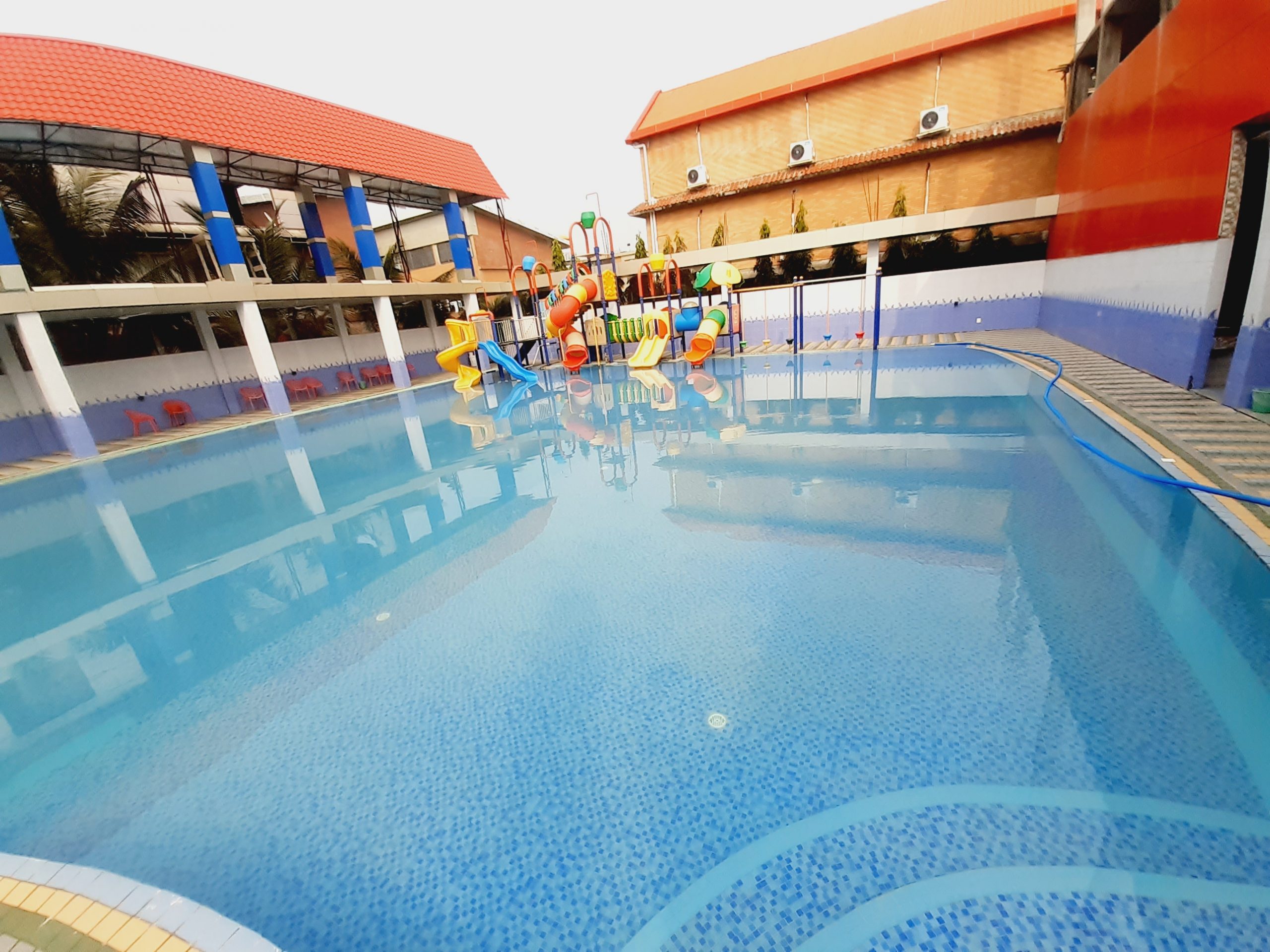
Dhali’s Amber Nivaas
If you want an authentic swimming experience! The Amber Nivaas Ltd pool in Dhali is ideal. It is one of Bangladesh’s largest swimming pools at 2500 sq ft. Our Executive room gives immediate access to our wonderful pool. Because of its varied depth, size, and shape, it is suitable for all ages. Our water slides add to the fun while providing safety features such as life jackets, safety rings, and rescue tubes. The poolside locker rooms, showers, and change rooms are beautifully designed for your privacy.
Also have Ladies Swimming Pool.
Contact Info:
Web: Dhalisamberresort.com
Book now: +8801708-590300
27. Subarna bumi resort

Subarna bumi resort
The Subarna Bhumi Resort in Gazaria, Munshiganj, is situated on a picturesque expanse of land and is surrounded by a wonderful environment. It is 43 kilometers to Dhaka.
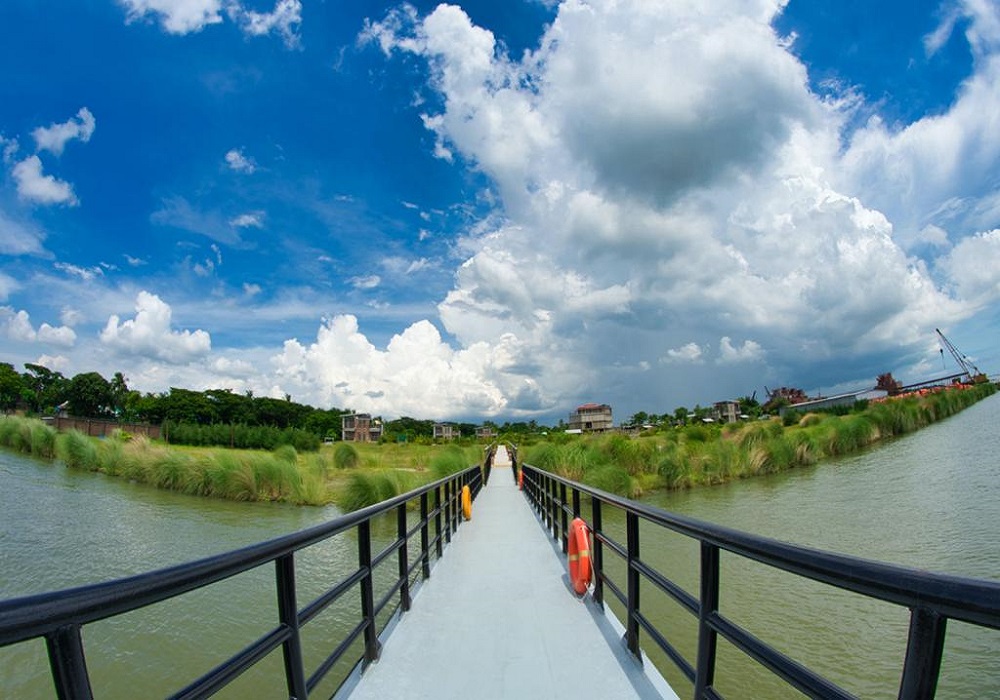
Subarna bumi resort
The resort is located distant from the bustle of the city, on the banks of the river Meghna, where the river’s fresh air provides a haven for city inhabitants. It is heartwarming to wake up in the morning to the sight of the Meghna river and the sound of birds chirping.
Features:
- Cottages
- Floating Restaurant
- Dining/Restaurant
- Events
- Corporate Meeting/Conference
- Wi-Fi
Contact Info:
Address: Ismanir Chor , Hossendi, Gazaria, Munshiganj
Phone: +880-1841-921065, +880-1841-921066
Mail: info@subarnabhumiresort.com
Booking: reservation@subarnabhumiresort.com
28. Dhaleswari Resort

Located in Polash Pur, Munshiganj’s Dhaleswari Resort is just a short drive from Sirajdikhan. Guests can enjoy a wide selection of amenities at the resort including an amusement park for youngsters, a swimming pool, a river boat, dining options, and family picnic facilities.

Within very cheap cost you can enjoy all .
Contact Info:
01971-520595

