


BBF Tourism
Dhaka – Narayanganj – Narsingdi – Munchiganj – Gazipur – Manikganj – Tangail – Mymensing – Rangpur – Dinajpur – Rajshahi – Khulna – Barisal – Comilla – Rangamati – Sylhet – Cox’s Bazar – Kuakata – Bandarban – Chottogram
Rangamati (Beauty of Hill Tracts) is located in the Chattagram division and is bordered to the south by the Bandarban District, to the north by the Tripura state of India, to the east by Mizoram State (India), to the west by the Khagrachari and Chittagong Districts, and to the northwest by the Bandarban District. It is a component of the Chittagong Hill Tracts, which are located in Bangladesh. Rangamati is considered one of the most appealing tourist destinations on the planet, as well as a paradise on earth, due to its hilly terrain and adventurous qualities. The hill’s lush foliage will soothe your soul and lift your spirits.
It is a place of lakes, where you will be greeted with a breath of fresh air. When you are at Rangamati, you should have the impression that the world is wonderful.
Most visited places of Rangamati:
- Kaptai National Park
- Kaptai Lake
- Parjatan Hanging Bridge
- Sajek valley
- Sheikh Russel Aviary & Eco Park
- Lake View Island
- Shuvolong Waterfalls
- Rajban Bihar
- Kaptai Dam
- Statue Of Martyr Rob
Kaptai National Park
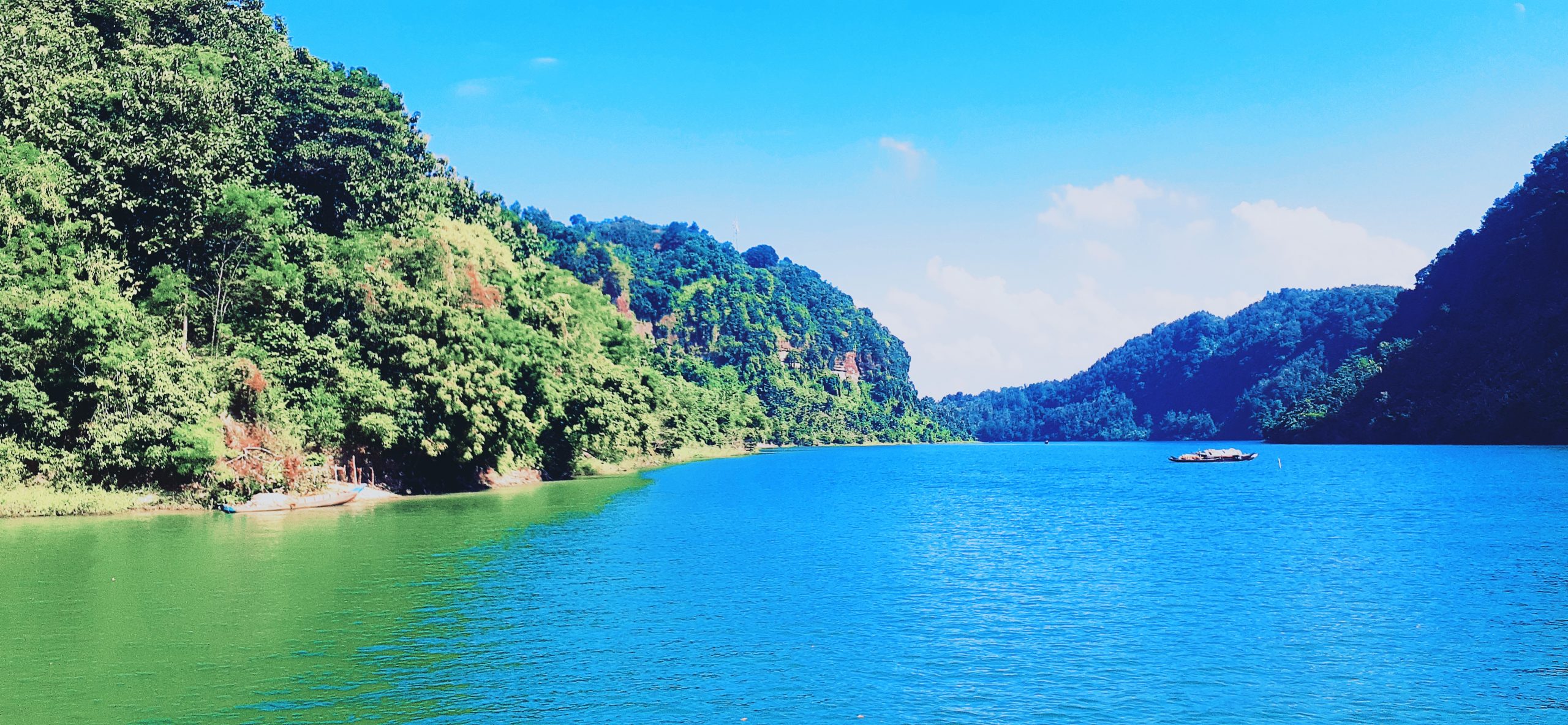

Kaptai National Park is located in Rangamati District. It was founded in 1999 on 5,464.78 hectares (13,498.0 Acres). Chittagong is 57 km away. It was once known as the Sitapahar Reserve. SITAPAHAR RESERVE USED TO BE 14,448.0 ACRES. The industrial estate in Kaptai will be built on 100 acres of formerly undeveloped land.


This complex includes the Kaptai and Karnaphuli Ranges. Kaptai National Park is managed by CHT South Forest Division. It is historically significant as Bangladesh’s first teak (Tectona grandis) plantation. The land is covered in mixed evergreens. In 2009, IPAC began working in this protected region.
Kaptai Lake:

Source: wikipedia.org
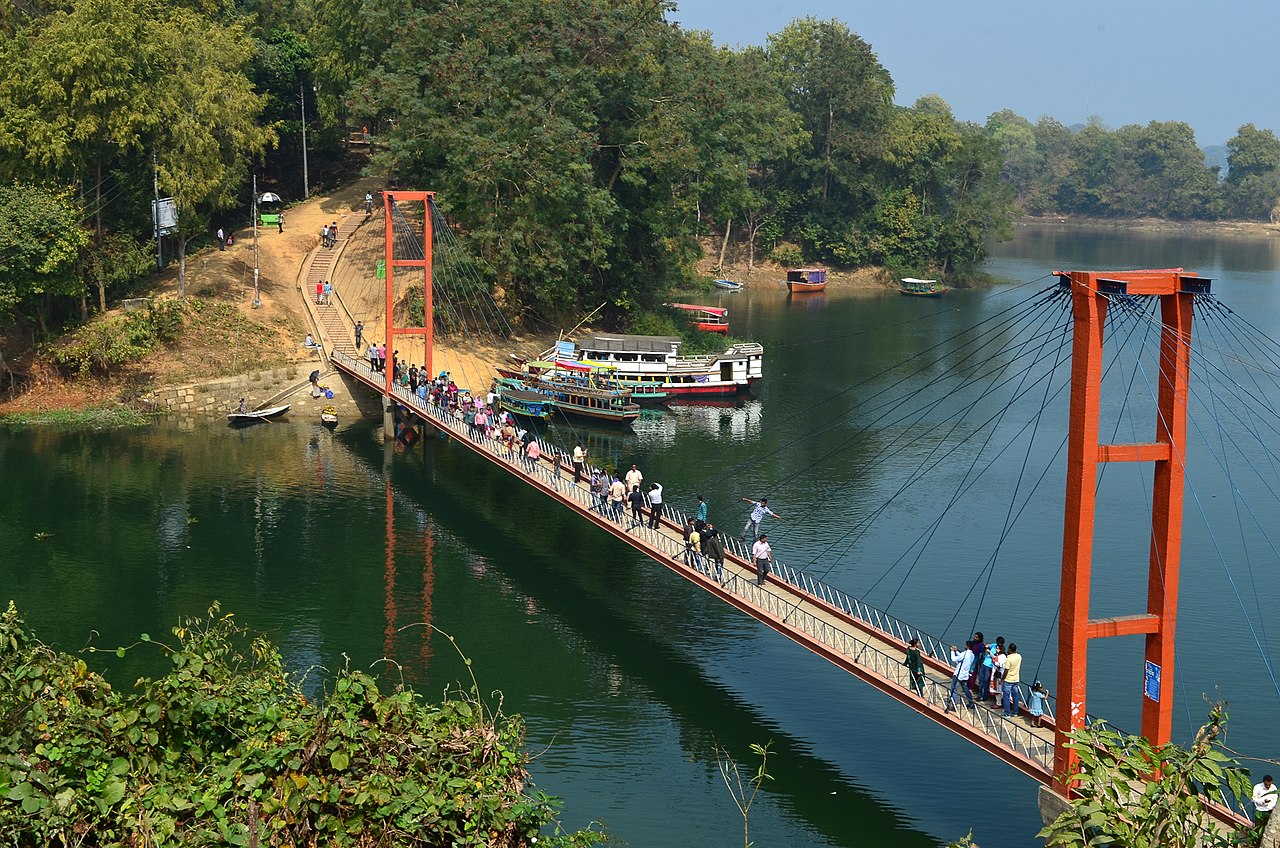
The largest lake in Bangladesh is Kaptai Lake, which is in the country’s northern part. People in Bangladesh live there, in the Kaptai Upazila of the Rangamati District of the Chittagong Division, which is in the district of Rangamati. In order to finish the Karnaphuli Hydroelectric Project, the Kaptai Dam was built on the Karnaphuli River to stop it. As a result of this, the lake was made. There is an average depth of 100 feet (30 meters) in Kaptai Lake, and it can get as deep as 490 feet (140 meters) at the bottom (150 m).


Source: wikipedia.org
Parjatan Hanging Bridge (Meghla):

Source: https://commons.wikimedia.org/
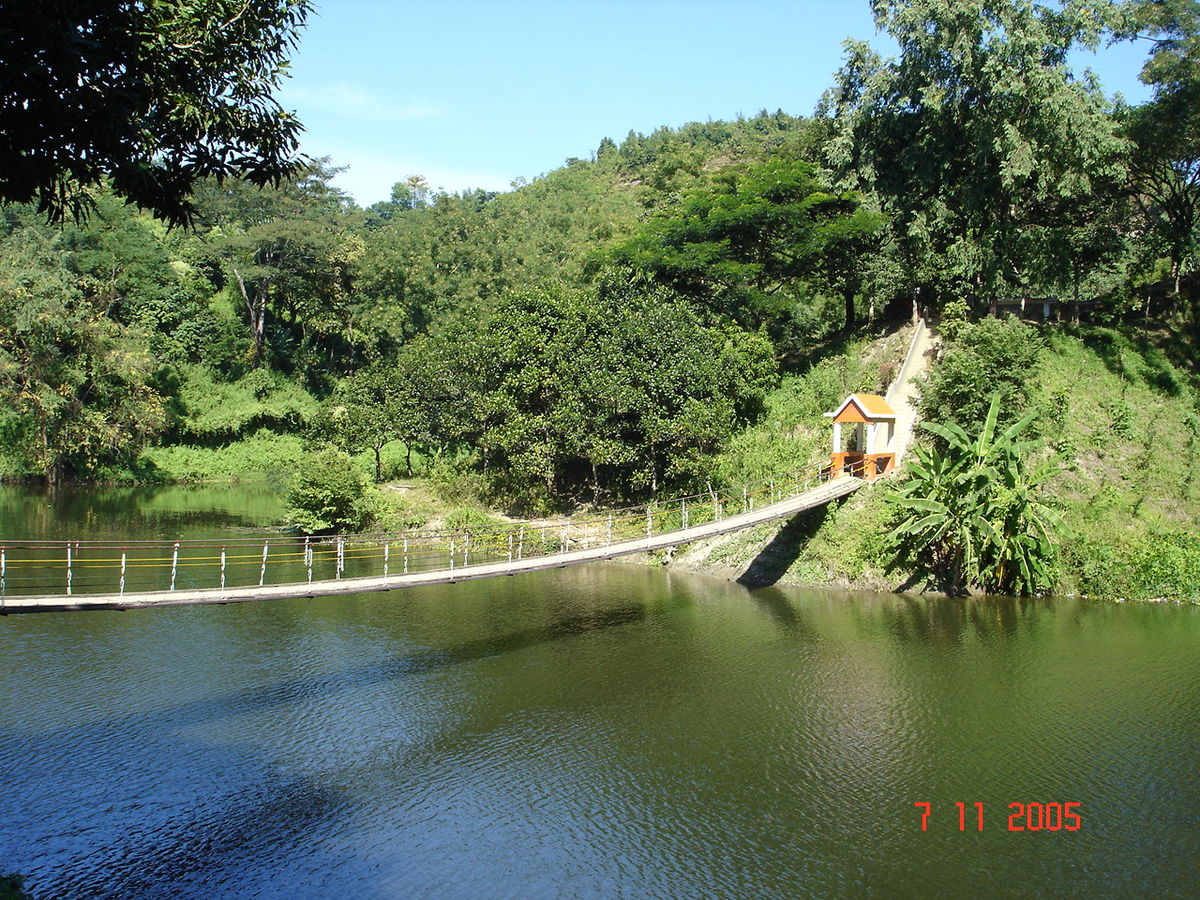
The Hanging Bridge is Rangamati’s most recognizable landmark (known as the Jhulonto Bridge in Bengali). It is a must-see tourist destination. Furthermore, Kaptai is reachable by waterway. Rangamati is a popular boating destination. Access to the hillsides and a profusion of naturally occurring waterfalls is provided via Kaptai and the Karnaphuli River.
Hanging Bride, Rangamati, is the only place to visit all year. Rangamati shines brightly during the wet season. Seasonally, the trees are getting greener, waterfalls are gushing, and the Karnaphuli River is raging. If you’ve previously visited Rangamati in the winter, we recommend coming back in the monsoon to witness how the scenery has transformed.
Boats may take you to tribal towns, King Chakma’s (tribal) Palace, Rajbonbihar pagoda, Tribal Museum, and other attractions. If you go shopping in the local market, you should look into tribal handmaid crafts.
Sajek Valley:

Source: wikipedia.org
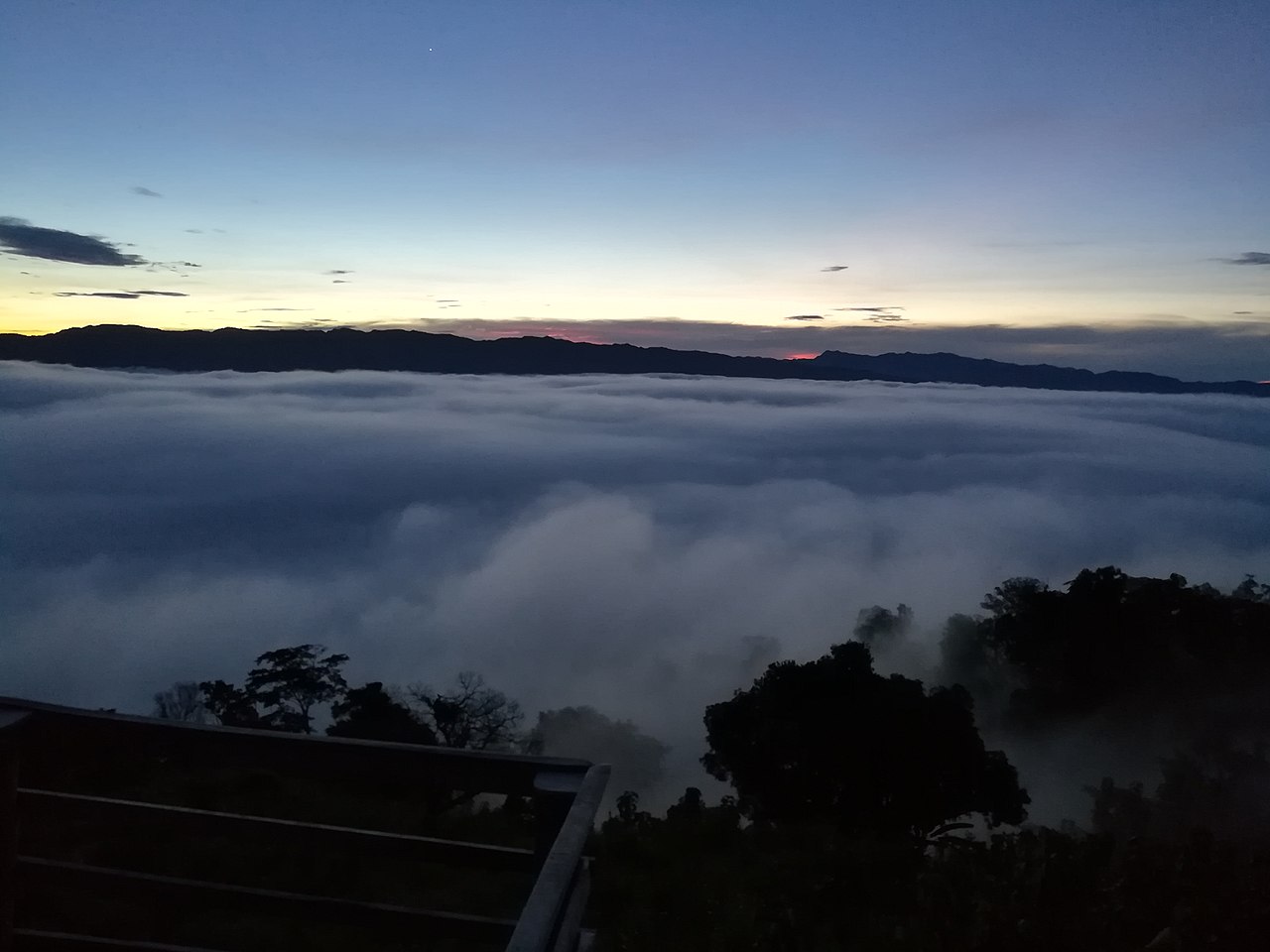
The valley’s name comes from the Sajek River, which flows through it and derives from the Karnafuli River. The Sajek River essentially acts as a natural border between India and Bangladesh. The Sajek Tripuri Valley, nestled among the hills of the Kasalong range of mountains in Sajek union, Baghaichhari Upazila, and Rangamati District, is one of Bangladesh’s most popular tourist sites. It is one of Bangladesh’s most popular tourist spots. At a height of 2,000 feet (610 meters) above sea level, the valley is situated. Because of its breathtaking vistas, Sajek Tripuri Valley is known as the “Queen of Hills” and “Roof of Rangamati.”
The natural beauty of Sajek Valley is attributed to the surrounding mountains, thick woodland, and grassland hill trails that encircle the valley. Many minor rivers wind their way through the mountains, including the Kachalong and the Machalong. On the way to the Sajek valley, it is necessary to traverse the Mayni mountain range and the Mayni river. The road to Sajek is a lengthy, twisting road with numerous peaks and valleys to travel.


Source: wikipedia.org
In this region, women appear to play a larger role in the economy. Fast food chains, tea shops, and roadside marketplaces are all dominated by female employees. Early-morning fruit and vegetable picking is a frequent occurrence around here.
How To Go Sajek:
Despite being in the Rangamati district, traveling to Sajek is much easier with Dighinalala in the Khagrachari district. As a result, you must first journey to Khagrachari. Buses from Dhaka to Khagrachari include the Saudia Paribahan, Shyamoli, Shanti Paribahan, S. Alam, Eagle, and others. The Non-AC bus would cost around BDT 520. If you want to board a bus with air conditioning, check for BRTC or Saint Martin Paribahan, which price between BDT 700 and 900. Furthermore, for only BDT 580, the Shanti Paribahan travels directly to Dighinala. These buses have counters around the city, notably Gabtali and Kalabagan in Dhaka. If you want to go on vacation, you can have a hard time getting a ticket if you don’t buy it ahead of time.


Source: wikipedia.org
Khagrachari and Sajek are separated by around 70 kilometers. Reservations for Jeep Gari/Chander Gari tours of the Sajek Valley can be booked from Khagrachari. If you return the same way, it will cost you between BDT 8000 and BDT 10000. It is excellent for a group of 12 to 15 people. However, if you belong to a smaller organization, you can save money by collaborating with another group. If you are unable to locate another organization, CNG is a possibility. The cost fluctuates between BDT 4000 and BDT 5000. Because the road is wavy, it is better to avoid using CNG.
Lake View Island At Kaptai:


Lake View Island was established by the Army in an abandoned camp surrounded by small hills on the shores of Kaptai Lake. Furthermore, the tourist area encompasses around four acres of two tillers. Beautiful cottages have been built here.
LAKE VIEW ISLAND is engraved in big English lettering on the lake’s hill tiller. Dwellings surrounded by woodlands can be found from the sea to the top of the hill. ‘Karnafuli Resort.’ Arrangements have been made to view the lake from a glass house near the resort’s entrance.
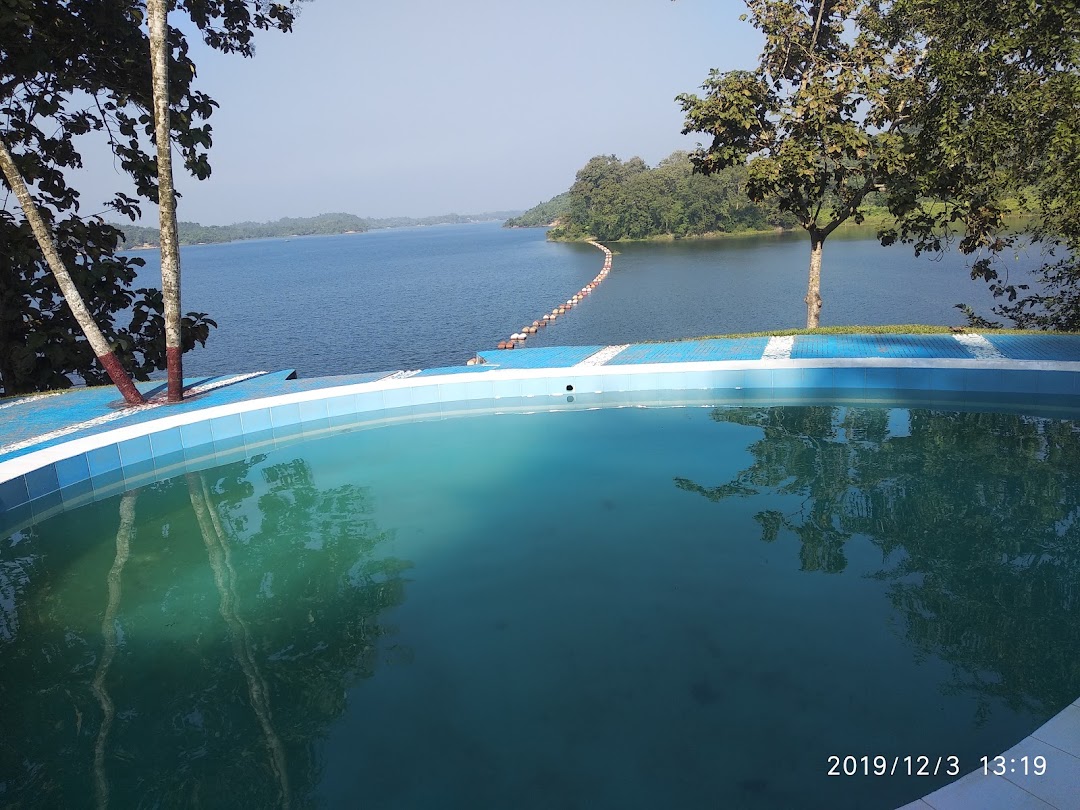
Lake View Island Resort At Kaptai (Rangamati)
You can only find peace when you’re cuddled up on the couch. The lake is crisscrossed by small boats and mountain ranges, creating for a pleasant image. You have the option of staying in an air-conditioned or non-air-conditioned cottage. As soon as you exit the cottage, you will notice a wooden barge floating on the sea.
Using this barge, Sultan’s “barge” has been reconstructed in a similar method.
The tree inspired the name. This bluebird is huge in comparison to other bluebirds. It’s a top-of-the-line 50-foot barge boat. It cost around 12 lakh rupees to make. This room has two cane-made double beds and an adjoining toilet. It has enough space for six people to stay. A cooler is provided in the bedroom. A cup of tea can be enjoyed while sitting on a porch or on the roof.

How To Go The Lake View Resort Rangamati:
To get to Kaptai from Chittagong, take a bus from the Bahaddarhat bus station. This activity will take between two and a half hours and two and a half hours to accomplish. If you don’t have a car, you can get around the city by taking a CNG auto-rickshaw, a microbus, or a Kaptai line bus. You must disembark in front of Kaptai Dam if you wish to visit Lakeview Island Resort. Hilltop Resort is a 10-minute CNG-powered autorickshaw ride away.
Shuvolong Waterfalls:


If you want to view a waterfall surrounded by high heels and stunning natural beauty, go to the Shuvolong waterfall. Shuvolong Waterfall in Rangamati is a breathtaking natural phenomenon. The only way to get to the waterfall is through the lake. In this location, People visit there by boat. Because of the waterfall, the surrounding mountains, and the natural beauty, it is a famous tourist site. The Shubholong Bazar is just in front of the waterfall. As a result, speedboats and motorboats may easily go from Rangamati to Shuvolong.
This magnificent waterfall invites you to pause for a few moments to observe its stunning beauty and to offer a few words in adoration of the natural wonder. The fall is a sight to behold during the rainy season. The Shuvolong Waterfall in the Rangamati region is a breathtaking waterfall.
How To Go to Shuvolong Waterfalls
Shuvolong is around 25 kilometers away from Rangamati Sadar. You must take a bus from Dhaka to Rangamati. You’ll need to charter a boat or a speedboat to get to the waterfall from Rangamati to Shuvolong. As you go down the canal through the hills and mountains, you can see the amazing beauty of Kaptai Lake. The lake, fountains, vast blue sky, hills, and, most importantly, the tribal people’s manner of life must astound you.
Shuvolong Waterfalls can be reached by speed boat or boat from a variety of locations in Rangamati Reserve Market, Tourist Ghat, and Rangamati town. To go to Shuvolong Waterfall, you would need to hire an engine boat from Tobolchari or Reserve Bazar. The cost was approximately 1000 TK. Up to 1500 TK.
Rajban Bihar:


Rangamati Rajban Bihar is located on the city’s outskirts to the east. A Rajbari of Chakmara Raja is also nearby. The Rajban Bihar may be reached by the Rajbari Ghat, which is located close to the iconic ‘Seven Heaven’ building. This is a seven-story edifice, each representing a distinct heaven and bearing its own name. Visitors must enter the premises barefoot in order to respect their custom.


There are several little buildings on the Rajban Bihar grounds. A bronze Buddha face is pushed into a wall inside a prayer hall for tourists to witness. You’ll get the sense that the Buddha is staring right at you no matter which way you look at the mask (a nice convex illusion). There was an older monk named Bonovante who was around 93 years old (a highly revered monk). Many Buddhists used to offer him tributes in order to obtain his and the god’s favor.
Kaptai Dam (Bengali: কাপ্তাই বাঁধ):
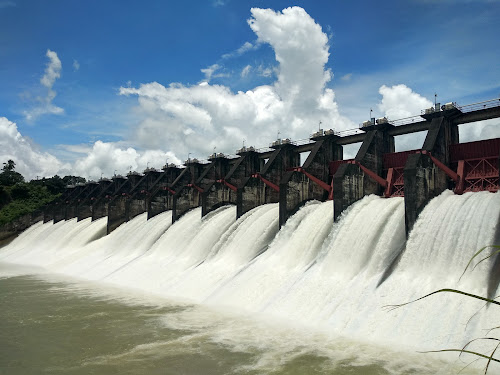

The Kaptai Dam is located near Kaptai, Bangladesh, on the Karnaphuli River, 65 kilometers (40 miles) upstream from Chittagong in the Rangamati District. It is the country’s sole hydroelectric power plant. It is an earth-fill embankment dam with a reservoir capacity of 6,477 million cubic metres (5,251,000 acreft) (known as Kaptai Lake). The dam and reservoir were primarily constructed to generate hydroelectric power. Construction was completed in then-East Pakistan in 1962. The generators for the 230 megawatt (310,000 hp) Karnafuli Hydroelectric Power Station were installed between 1962 and 1988.
Dams have a long history of displacing Indigenous peoples and showing plain scorn for them, and the Jumma Peoples are no exception.
Statue Of Martyr Rob:


Bir Shrestha Munshi Abdur Rouf erected it as a memorial structure. Martyr Rob Statue is located in Manikchhari, Rangamati. This is an excellent holiday destination. This is the spot where the martyr lense Nayak munshi abdur rob’s memory is kept.
Abdur Rouf is regarded as one of the seven great bravos (bir srestho) of the freedom struggle in Bangladesh. He was a brave soldier during Bangladesh’s liberation war. He was so brave and patriotic that he gave his life for the independence of Bangladesh. For his work, his name was remembered by the people of Bangladesh.

